

Comics for Metalheads
Quality Picture Books for the Musically-Inclined Brute


Rock ’n’ roll and comics are two areas that have always played well together, both having found their ways into the hearts of Americans in the first half of the 20th century. Come the ‘80’s and its perfect storm of escapism, metal fans the world over will have found comfort in the fantastic worlds of Sword & Sorcery and Sword & Planet.
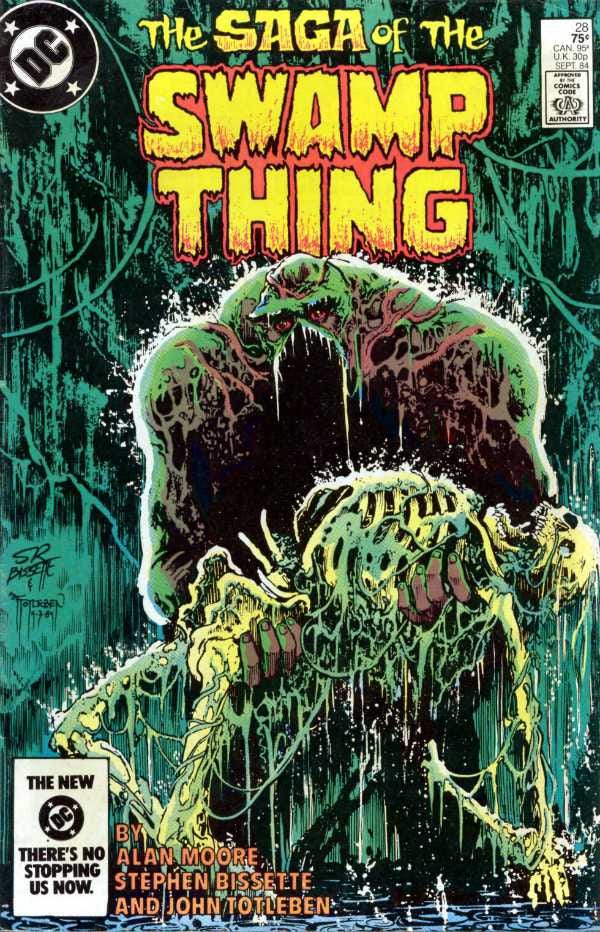
Much like rock ‘n’ roll’s eventual evolution into metal, the ‘80s marked a period where comics grew harder-hitting, tackling mature concepts and leaving behind the dualism of Superman in favor of the moral ambiguity of Dr. Manhattan. It is within these fuzzy boundaries that the reader is called upon to construct morals of their own from the complex assembly of human lore laid in piecemeal before them. While comics never quite drew the gaze of the Satanic Panic the same way that metal music did, the Comics Code Authority that had served as a seal-of-approval since the moral panic of the 1950’s would at the same time begin to lose its hold on major players of the scene, starting with DC’s departure over Swamp Thing. When held next to each other, the separate-yet-similar trajectories of rock’n’roll & comics through the 80’s serve as two of many distinct markers for a greater shift in the Overton window away from morally-driven artistic censorship.
In a nod to a scene that I hold as dear as metal music, here’s a list of some comic recommendations — some new, most old — that showcase the parallels from the cousin artforms. These recommendations are likely to scratch an itch for any metalhead, but especially the fantasy-loving, face-painting, axe-wielding type. Enjoy.
Dark Regards
Written by Dave Hill, Artwork by Artyom Toplin
Dave Hill is new to the comics game (and apparently, active on Substack), but he’s come out swinging with Dark Regards. The story follows Lance, an aspiring black metal musician who antagonizes a handful of Norwegian black metal projects via a hate letter to their label, prompting a quest to America to set the record straight. Hilarity ensues. Littered full of nods to proto- and first-wave black metal, Dark Regards is a playful, yet earnest, love letter to the genre.
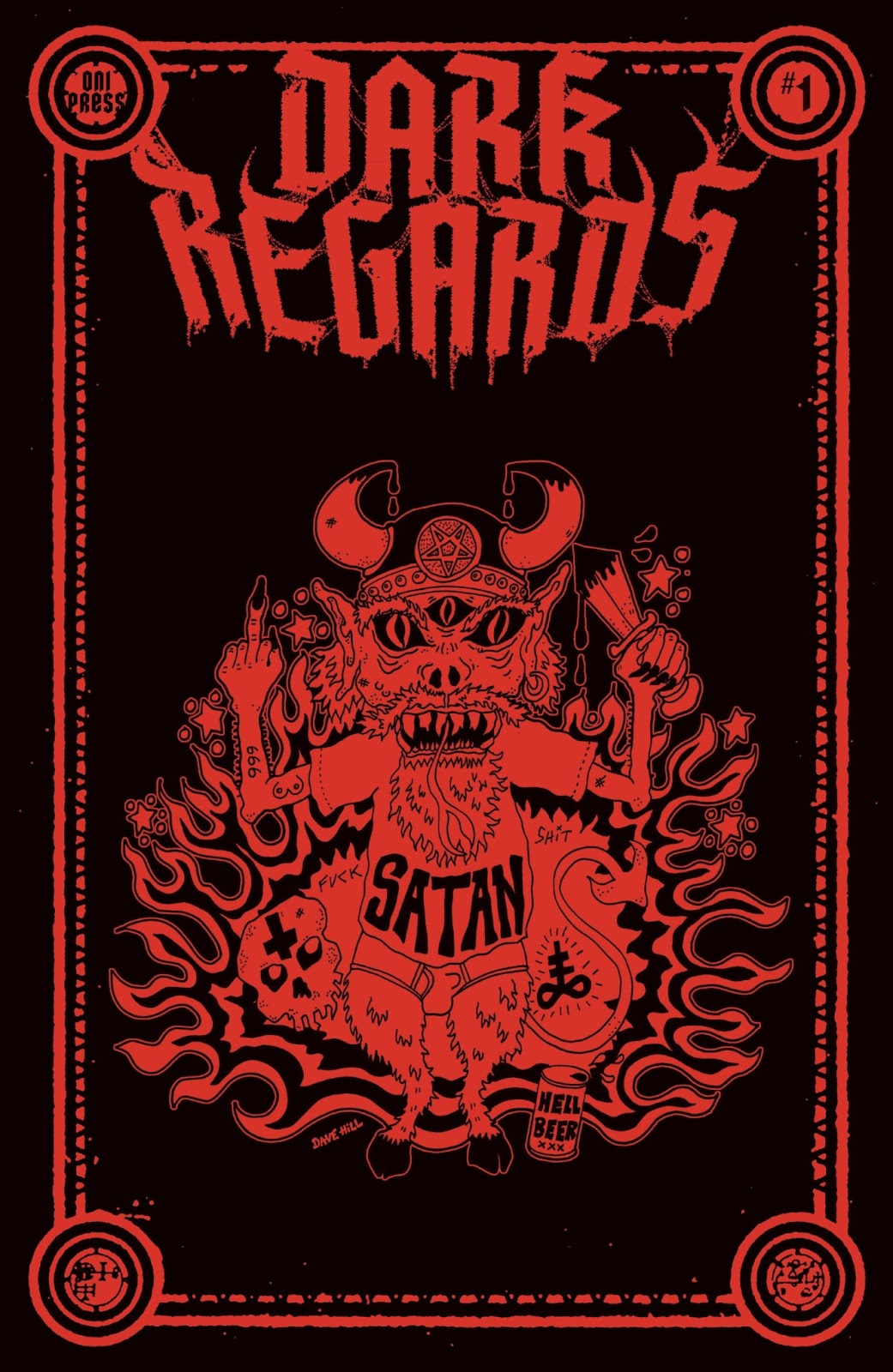
If the story wasn’t already great enough, it becomes funnier when you learn that Hill based the story on his actual email exchange with industrial black metal pioneers Mysticum (yes, THAT Mysticum).
hey mysticum guys,
i got your e-mail off the internet. i was surprised someone in a black metal band would use e-mail but whatever i guess we can't expect you guys to live in caves all the time (if you were serious about black metal you would though). anyway, the reason i am writing is because i was wondering if there were two bands called mysticum or something. the reason i ask is because my friend todd told me about a band called mysticum that were really heavy and extreme and that i should totally check them out. so i went out and bought your record and all i got was this total pussy metal instead. is there another band called mysticum that i should know about? i'm really into super heavy and extreme black metal, so if there is another mysticum that plays this kind of music i would really like to know. don't get me wrong, i'm sure tons of chicks dig what you guys are doing, but i'm into some serious shit, not this strummy bullshit you guys seem to be into. anyway, let me know if you have heard of these guys. are you guys on mtv?
dark regards,
lance AKA the king of black metal
Pure gold. Dark Regards wrapped up recently, so pick up some issues while you still can, and maybe go show Hill some support on Substack as well.
The Creeping Below
Written by Brian Azzarello, artwork by Vanesa Del Rey
The Creeping Below takes the more self-serious approach to black metal, but it’s a fantastic homage nonetheless. When Val, a professional photographer on a work trip to Oslo, crosses the wrong black metal band, she’s made the subject of a ritual sacrifice to primordial gods. However, said primordial gods have different plans for her, inducting her into their unclear cause to avenge her own murder upon her prompt return to the mortal realm via a very leafy undeath.
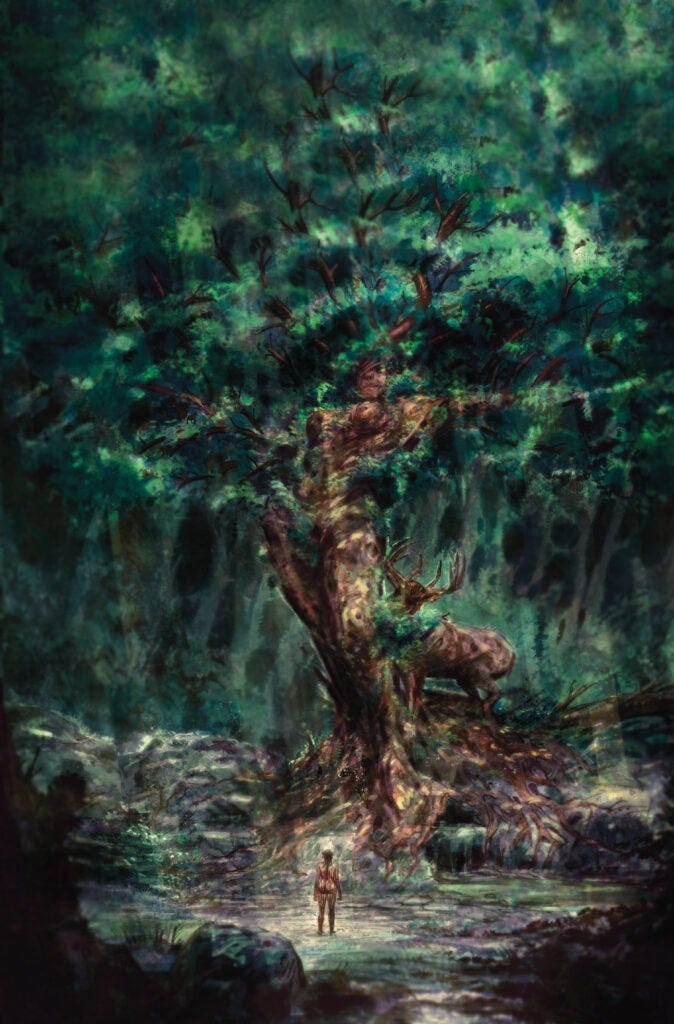
The story is fun, but that’s to be expected from the Eisner-winning writer of Joker (the graphic novel, not the egregiously pseudo-intellectual Scorsese rip-off). The star of The Creeping Below is the lesser-known Vanesa Del Rey. Her cover art invokes an ethereal magic perfect for the subject matter, and the inner art tastefully balances literalism with the abstract. The detailed settings hosting the narrative regularly morph into expressive visual sequences that heighten the story-telling and enrapture the gaze in the trips between speech bubbles. Color me impressed.
At The Mountains of Madness
Adapted & illustrated by Gou Tanabe, originally written by H.P. Lovecraft
Gou Tanabe’s Lovecraft adaptations are some of the best entries into horror manga of recent years, and personally, I count them among my favorite Lovecraft adaptations of any medium to-date. Chief among them is At the Mountains of Madness, my favorite retelling of the story since Alien vs Predator.
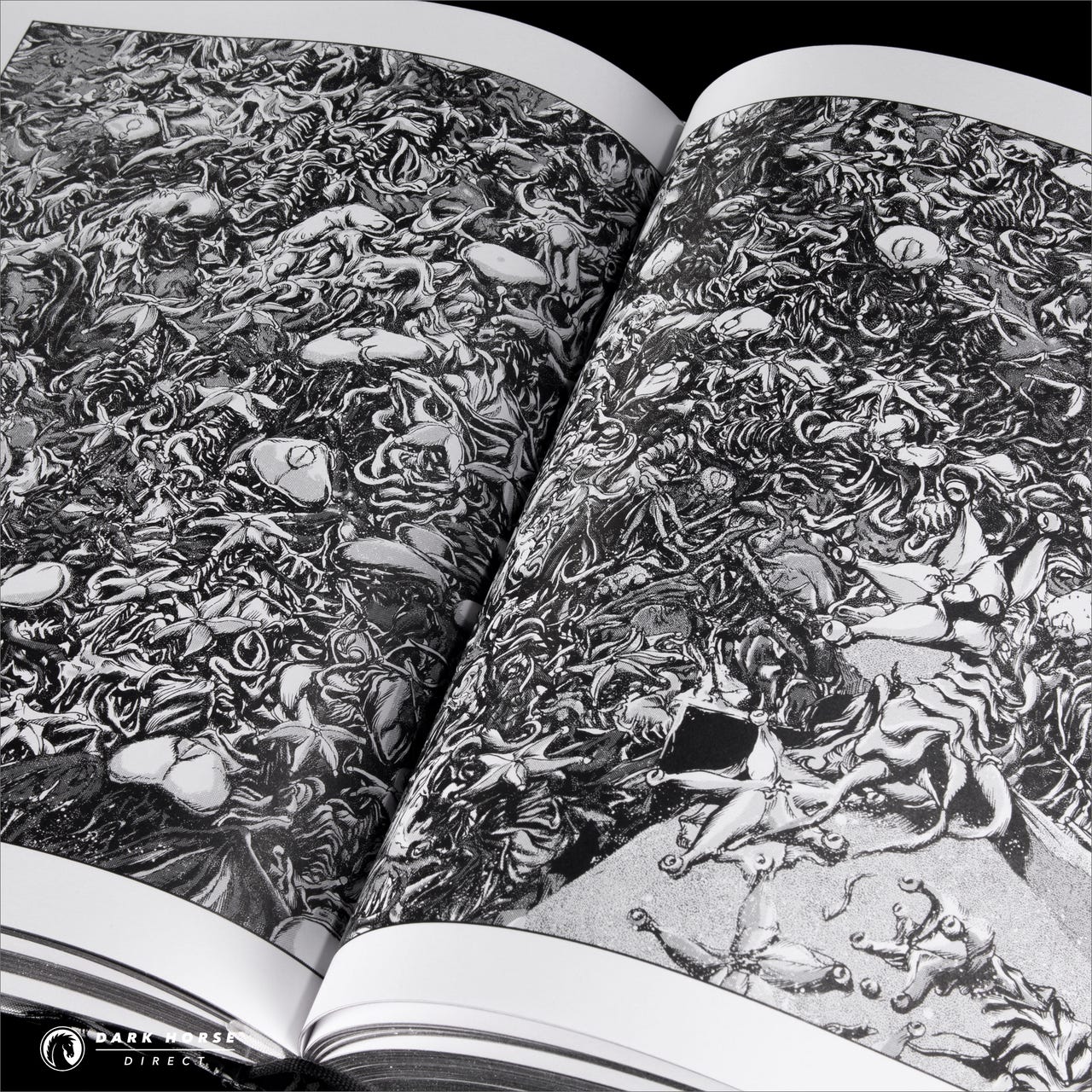
It’s not easy to adapt Lovecraft, with few movies, games, or TV shows demonstrating the visual chops required to convey the uncertain nature of Lovecraftian horror. Tanabe shines where so many have failed, using the medium to skillfully toe the line between the literalism commanded by sequential art and the abstract prose that has made Lovecraft such a polarizing figure in literature. (Besides the racism, that is.)
American Gods
Written by Neil Gaiman, co-written and illustrated by P. Craig Russell, artwork by many, but most notably, Scott Hampton, Glenn Fabry & Colleen Doran
Speaking of authors we love to hate… Neil Gaiman was recently the subject of the slowest cancellation ever (and deservedly so) but it’s going to be very difficult to diminish the impact of his writing, largely lauded as some of the best of modern literature. No work demonstrates this more than American Gods, originally a novel, but since adapted into both a TV show and comic book, the latter by Gaiman himself. The former isn’t a half bad on-screen adaptation either.
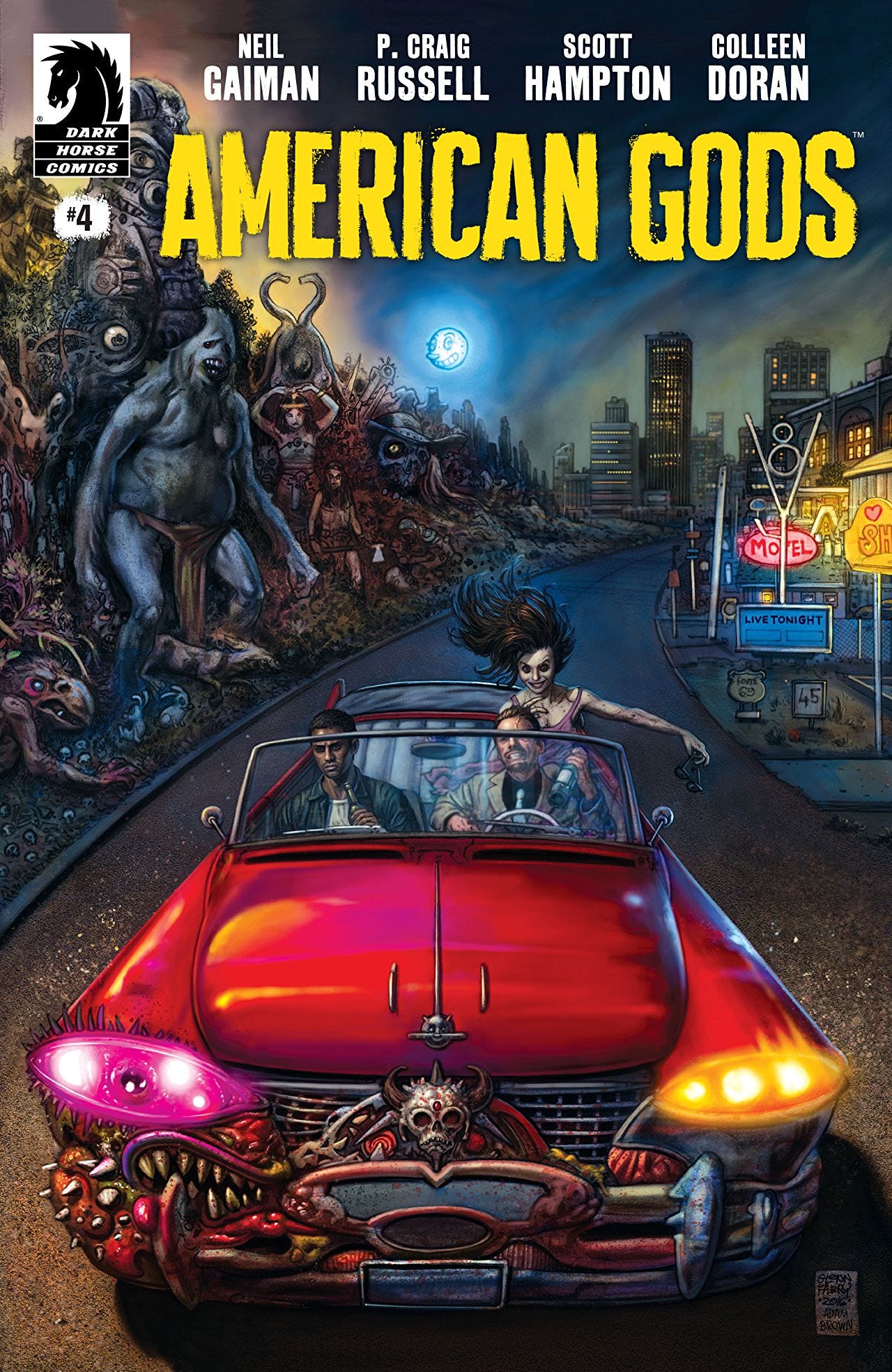
Gaiman is joined by what I can only describe as the dream team of 90’s-era comic book artists. As a result, the series ends up being a visual feast start-to-finish. Regardless of the line-up, what truly makes this series worthwhile is Gaiman’s storytelling.
Ex-con Shadow Moon, upon the sudden death of his wife, takes a chance and enters the employ of a mysterious Mr. Wednesday. Immediately, he’s thrust into an all-out-war between the Gods of Old and New, struggling to understand where he fits into it all. Well-researched and endlessly imaginative, American Gods serves as a thoughtful compare-and-contrast of modernity with the primordial, questioning what it really is we’re worshiping when we call upon our gods, whether Odin or The Internet. This is a must-read that continues to grow in relevancy. Sure, Gaiman sucks, but metalheads are well-adjusted to hating their heroes. Maybe pick up a used copy.
Preacher
Written by Garth Ennis, inner artwork by Steve Dillon, covers by Glenn Fabry
It’d be folly to write up a post about metal-friendly comics and not mention what might be the most blasphemous comic of all time. Speaking anecdotally, Preacher is one of those comics that is more widely known than read, especially thanks to the TV series adaptation (which I cannot recommend, unfortunately. Decent show, bad adaptation).
After a mishap in Heaven lets loose Genesis, the unholy offspring of an angel and demon, the Will of God is accidentally bestowed upon an unsuspecting Jesse Custer, a preacher from rural Texas. Upon realizing the mistake made, the forces of Heaven set out to clean up their mistake — as well as any witnesses. Spurned by the offense, Custer turns his sights towards The Almighty himself in a divine Oedipal mission to slay The Father. Fucking awesome.
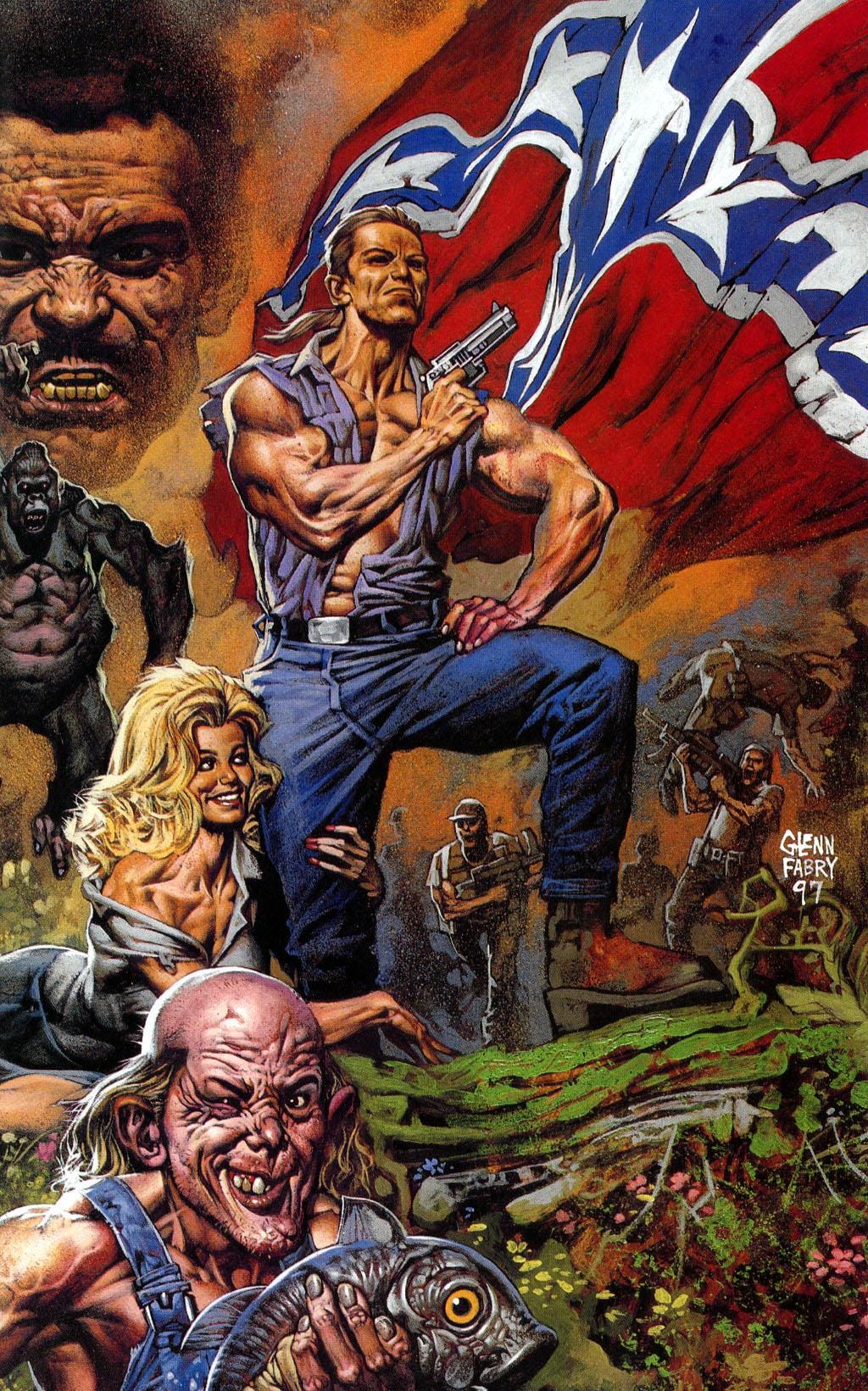
Garth Ennis is a force to be reckoned with — while not originally his character, he is the longest running writer for Hellblazer, and the continual success of the TV adaptation of The Boys demonstrates his ability to craft stories that impact a generation. If you've enjoyed any adaptation of Ennis’ work, I can’t recommend Preacher enough.
Conan
Originally written by Robert E. Howard
Any long-enough conversation about Sword & Sorcery is inevitably going to lead to the story that started it all. Originally penned as pulp fiction by Robert E. Howard in the early ‘30’s, Conan the Barbarian found its way into comic panels via a Mexican adaptation of Queen of the Black Coast published in 1952. Upon being picked up by Marvel in the 70’s, the series went on to be the driving force in fantasy comics.
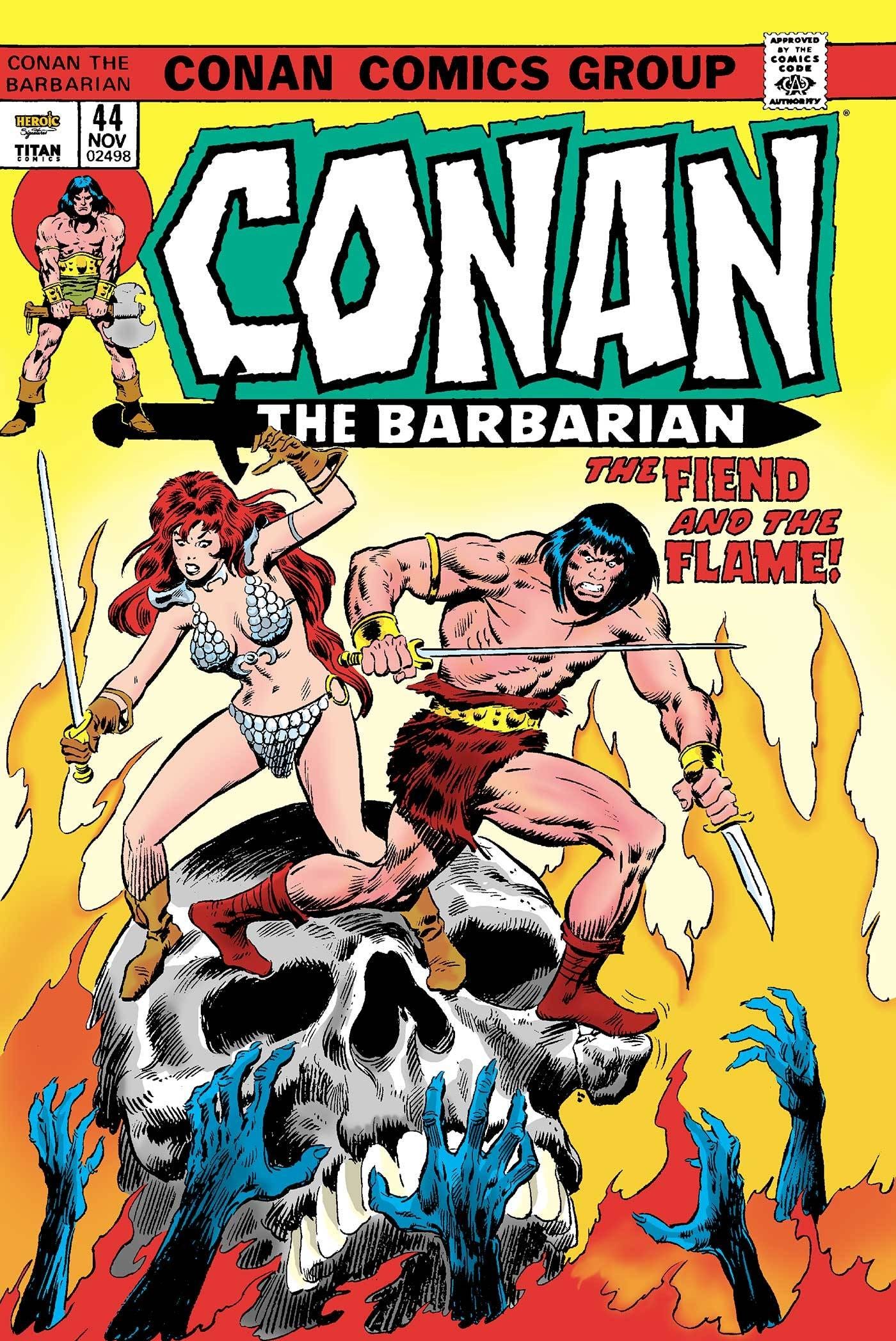
Conan’s early arrival in the 20th century affords Howard a retrospective place alongside Tolkien or Lewis, but in the immediate company of “lower” pulp writers like Lovecraft. The first Conan story was even published in Weird Tales, the same pulp publication that introduced the world to Lovecraft’s unique (and, of course, xenophobic) brand of horror.
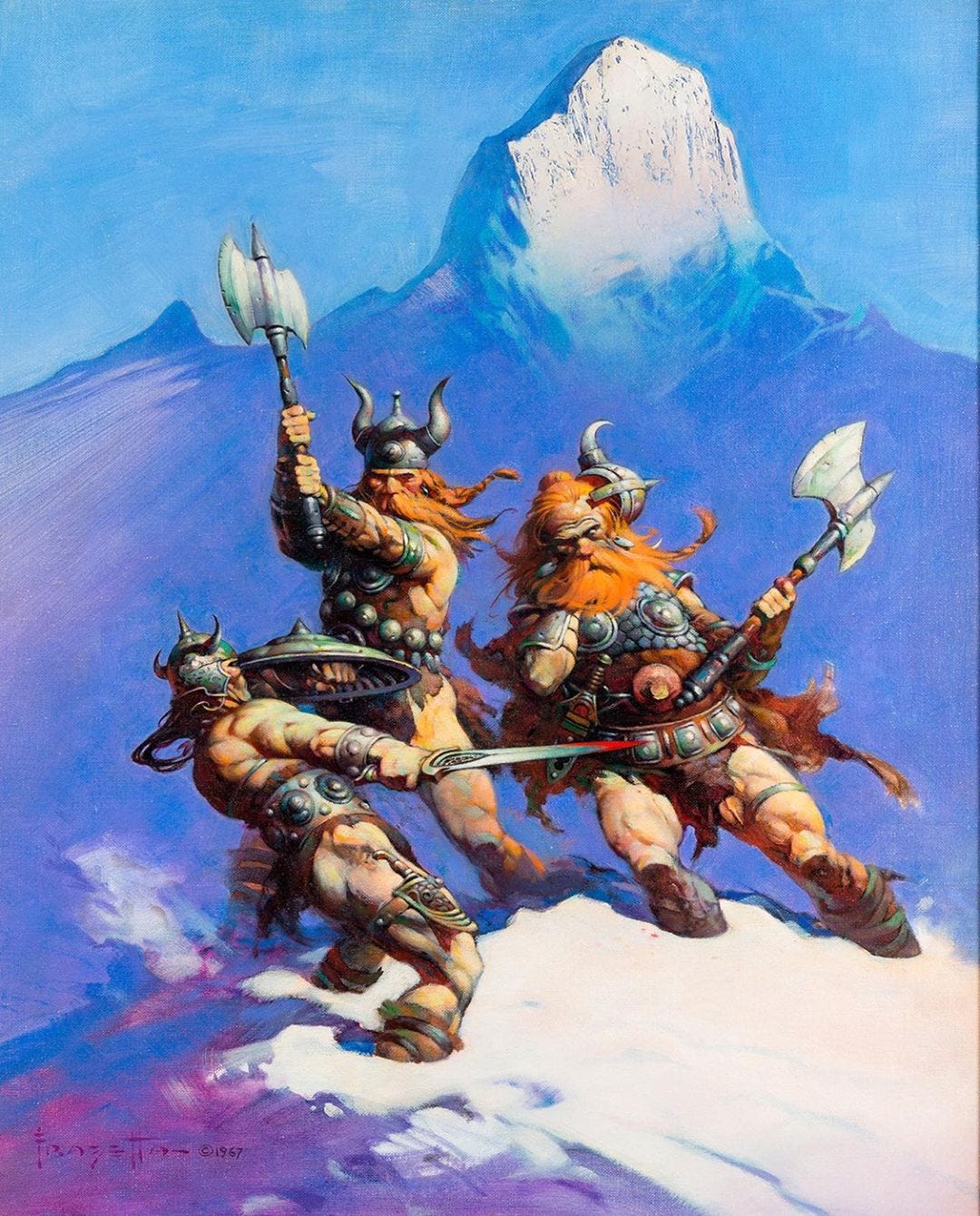
It’s difficult to oversell Conan’s place in the minds and hearts of fantasy and metal fans alike. A connection that illustrates just how deeply the links run can be found in the cover for Hard Attack, an album from 70’s fuzz rockers Dust. The Frank Frazetta painting, Snow Giants, was prior used as a cover for a Conan collection titled Conan of Cimmeria, released three years before Dust’s use of the image.
Heavy Metal
Alright — technically not a comic, but I’d be amiss to talk about heavy metal comics and not mention the legendary magazine that inspired so many. Originally started by National Lampoon in 1977 as a republication of the Mœbius-associated Métal Hurlant, Heavy Metal has persisted against all odds and continues to be published today.
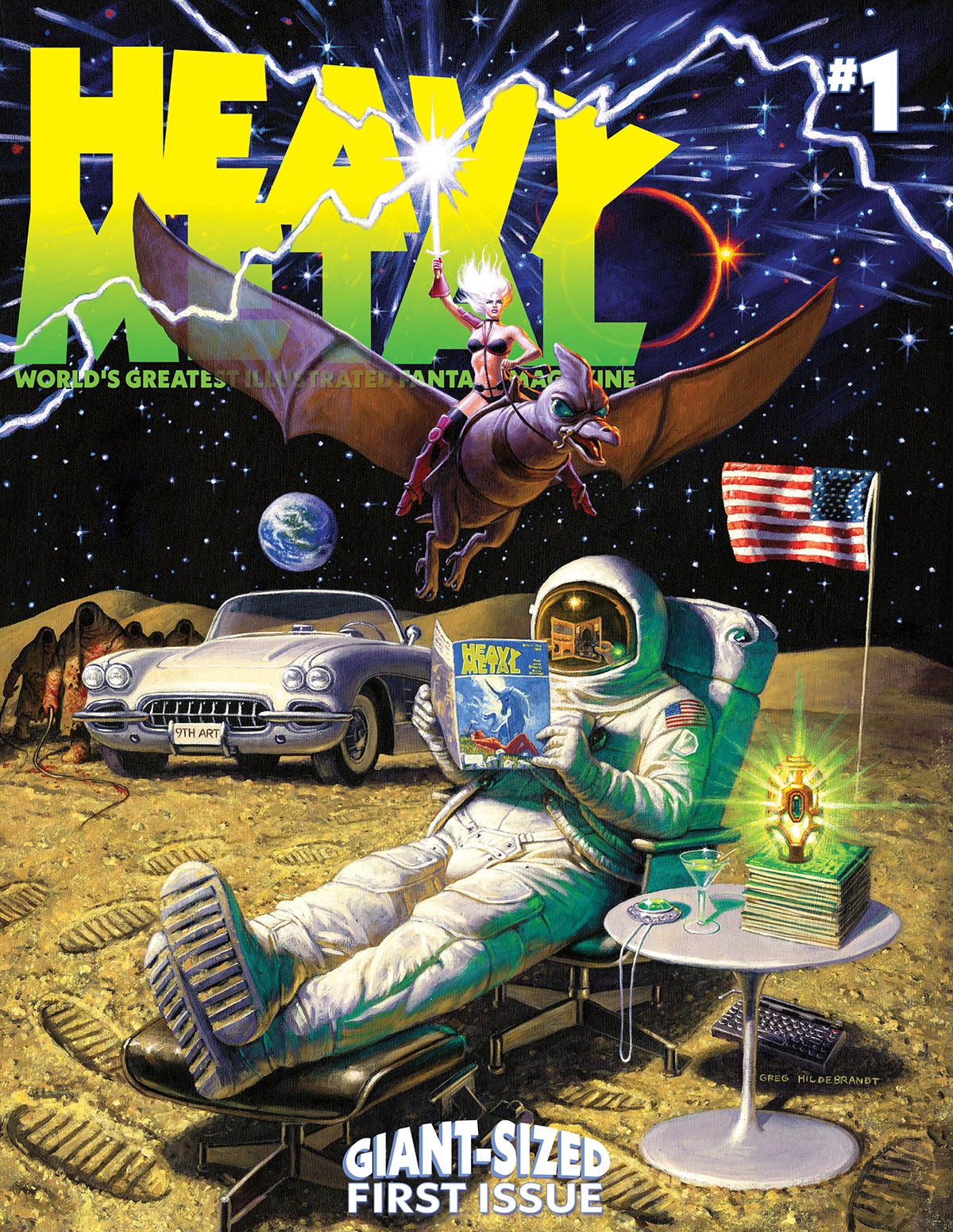
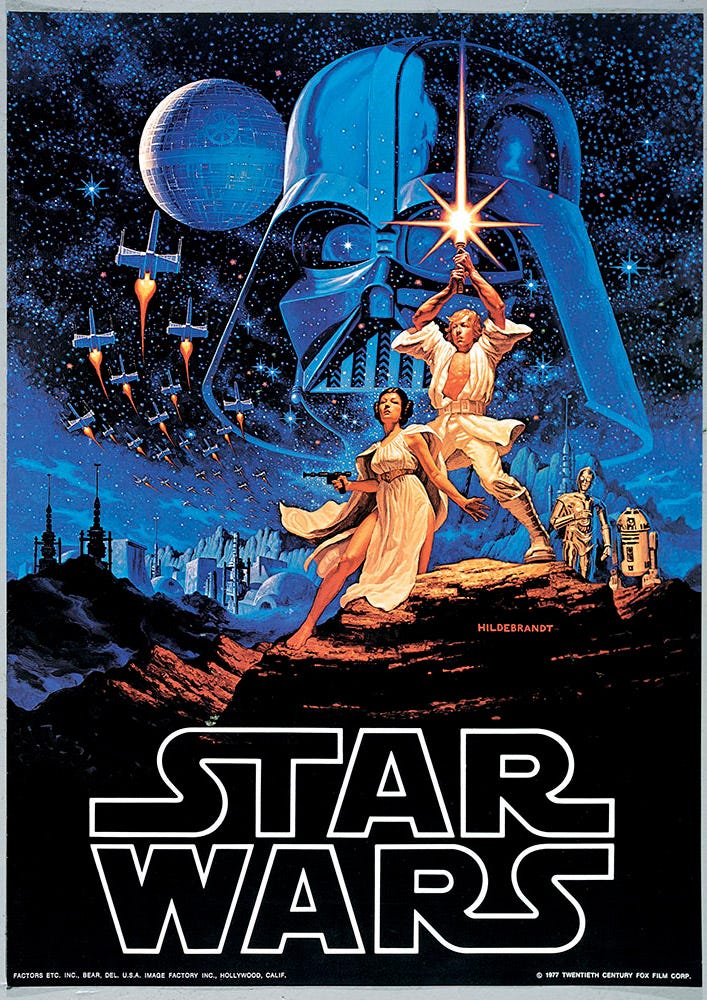
All-in-all, Heavy Metal is geared more towards comic shorts than music, but the hard bent towards fantasy and sci-fi did not go unnoticed by metalheads. The bridge between is showcased clearly in the publication’s eponymous 1981 movie, the rock ‘n’ roll-laden soundtrack even including “The Mob Rules” from Dio-era Sabbath. The cover of the associated album, Mob Rules, was created by Greg Hildebrandt, an early contributor to Heavy Metal.
Den
Written & illustrated by Richard Corben
While we’re discussing Heavy Metal contributors, we might as well bring up the obvious: the incomparable Richard Corben. Those of you who have seen the Heavy Metal movie may recognize the legendary hardbody Den, ironically voiced by the late John Candy.
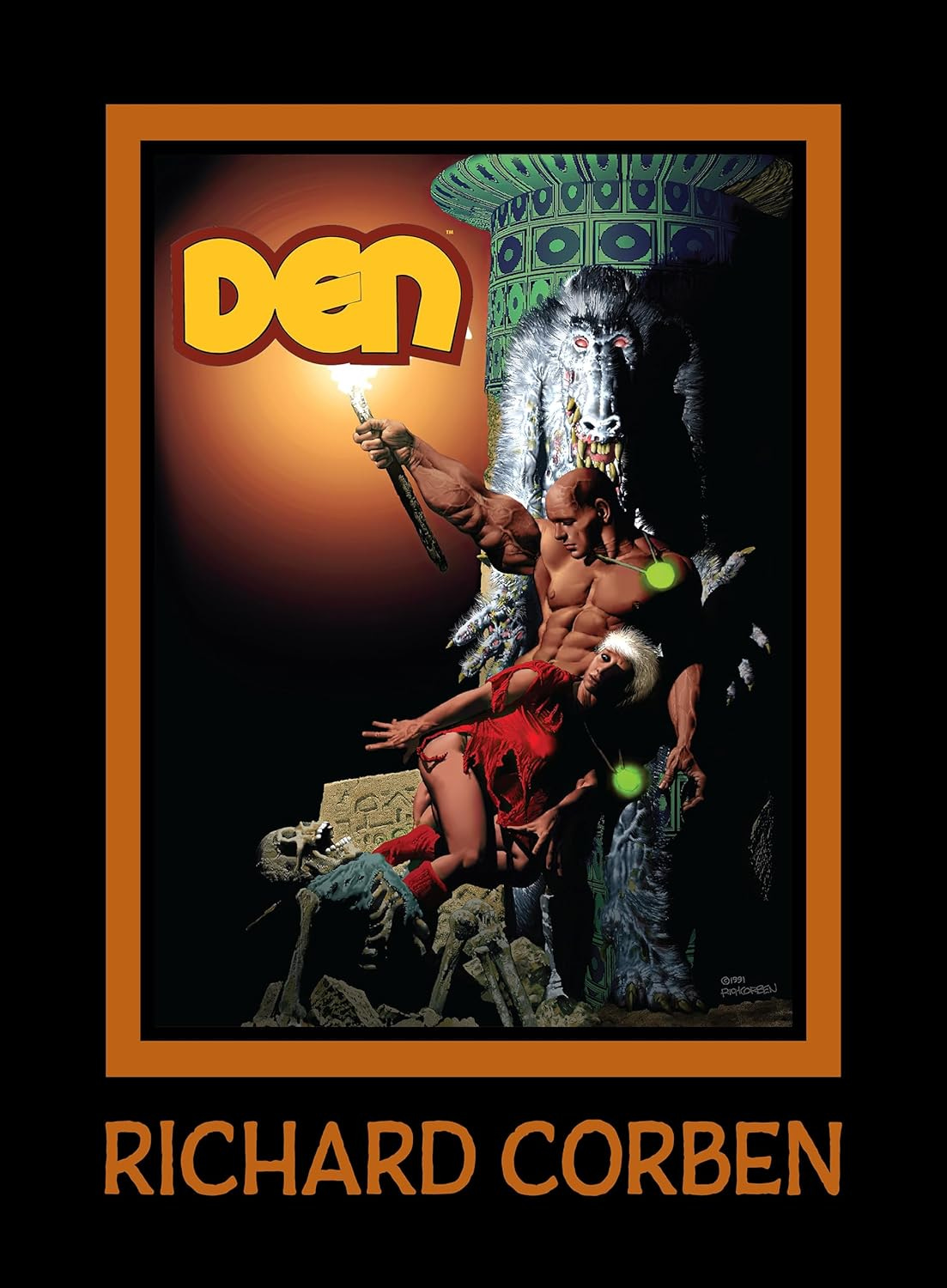
Corben is an artist of a caliber far beyond what many could ever hope to achieve — truly your favorite artist’s favorite artist. His penchant for hyperrealism contoured across uncannily proportioned bodies is immediately identifiable, giving him the kind of visual signature that any artist longs for. It’s art that must be beheld with your own eyes — holding the book in my hand now and comparing with images online, the loss is obvious. Corben’s colors are too rich, the details too fine, that to cast his work into pixels feels like sacrilege. Den’s story is forgettable, but it matters little, as the story and setting really only serve as a conduit for one of the most… uh… stimulating (wink-wink) journeys in modern fiction.
From Hell
Written by Alan Moore, illustrated by Eddie Campbell
Being one of the most lauded comic writers of all time, Alan Moore needs no introduction. It was his penchant for pushing the comics genre into new spaces that lead to the aforementioned abandonment of the Comics Code Authority by DC in 1982. When forced to choose between CCA approval and allowing Moore to take Swamp Thing in a darker direction, DC smartly chose Moore, paving the way for such seminal works as Watchmen in ‘86, The Killing Joke in ‘88, and, most relevant here, From Hell in ‘89. (That all three of these works have found their way to the silver screen speaks volumes towards Moore’s impact.)
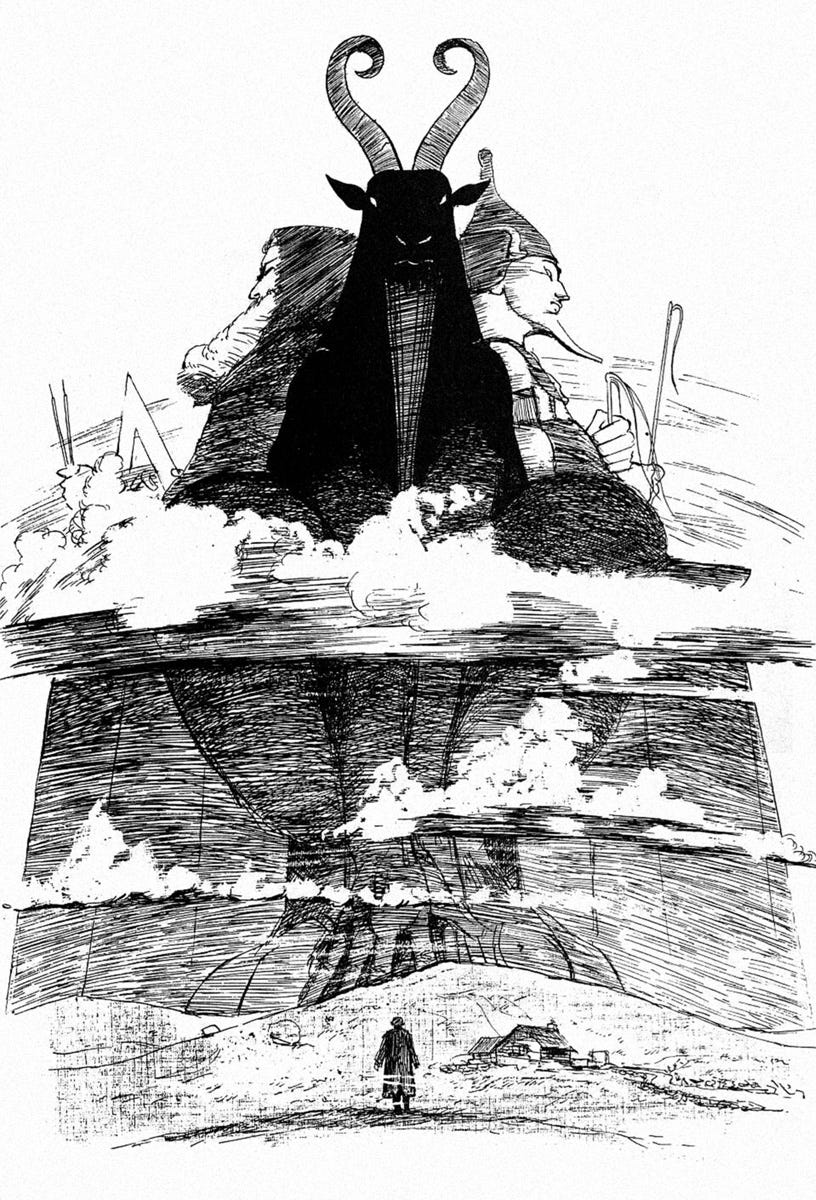
From Hell is not a comic that could have existed in an industry dictated by the CCA, largely due to its graphic retelling of the infamous string of murders committed in Whitechapel a century before by the serial killer named Jack the Ripper. (It’s worth noting that the drama over Swamp Thing centered around a scene that merely implied the sexual assault of a woman, which pales compared to the brutal depictions of murder in this work.)
The case of Jack the Ripper remains unsolved, though far more is known now than was at the time of Moore’s writing. Factual accuracy matters not however, as this is a tale more about the myth than the murders themselves. Jack the Ripper is regarded by many to be a historical milestone in the popular world of “True Crime”, a scene known for fetishistic portrayals of murder — a trait shared with metal. As such, Moore anchors his thesis to what Jack the Ripper has become in modern Western culture.
Eddie Campbell’s artwork deserves mention, especially with how distinct his chosen style is from anything else on this list. Portrayed through pen-and-ink, From Hell regularly pushes into the expressionistic, giving a further unsettling quality to the already highly graphic portrayals of Jack’s murders. This untethered style fits perfectly alongside Alan Moore and his legendary fourth-wall-breaking style of writing. In fact, From Hell is observably the point where Moore smashed through the ceiling into the transcendental style he’s known for today. As the story reaches its astounding climax, you can practically see Moore becoming aware of his own godliness within his story. For this, From Hell is an absolute must.
Berserk
Written & illustrated by Kentaro Miura
Berserk is a perfect comic, and that may be the easiest opinion I hold. There aren’t many that are going to challenge that claim; even those who haven’t read it know better. This story’s repute in the world of anime and manga is that of “The Greats”, Fist of the North Star, Dragonball, Akira, Ghost in the Shell, or any Ghibli work sitting alongside. What’s more, Berserk achieved its fame while being one of the most depraved comics to ever sport a coherent plot, complete with stomach-churning depictions of violence and rape. This is the comic your mother warned you about.
Berserk doesn’t make this list because of some interesting link between artists or some subtle influence across decades. The reason Berserk finds itself crowning this list of metal comics is quite simple — brutish even:
Berserk is metal as fuck.
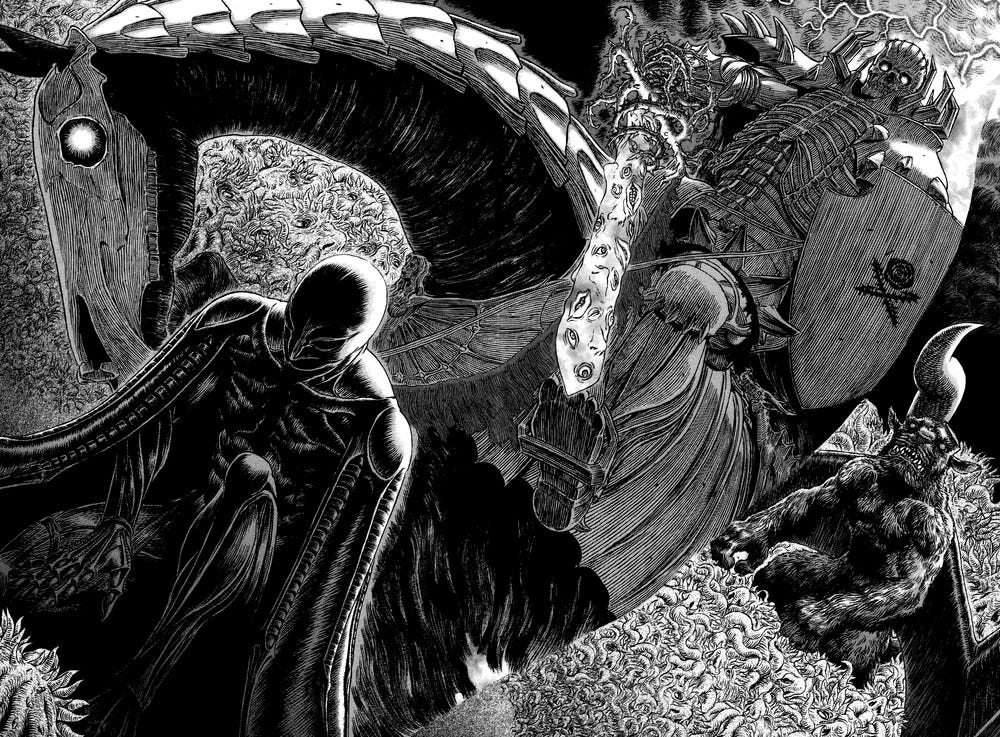
Berserk having achieved its fame while being the comics equivalent of an NC-17 film is owed largely to it being so goddamn good. Kentaro Miura’s art is jaw-dropping, his characters, lovable and compelling, the plot as motivating to the reader as those entangled within. It’s here the parallels between comics and metal stand like monoliths — so often has a metal fan heard the condescending question, “How can you listen to this?”, to which the compulsory response is always, “Are you not hearing the [insert rock’n’roll instrument here]?!” You will likely find yourself having to answer similar questions should anyone walk upon you reading Berserk (especially at the legendary close of the Golden Age arc, when things get pretty… uh… tentacle-y).
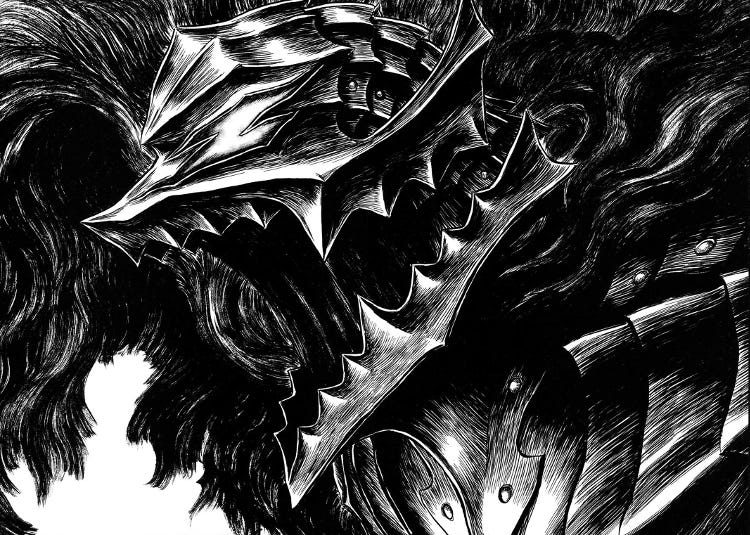
At the core of metal is belligerent talent — artists who do things they know will make you uncomfortable, but do so with such mastery that no one dare cast them aside. That is Berserk — unsettling, often disturbing, laden with gut-punch after gut-punch — but you can’t tear your eyes away.
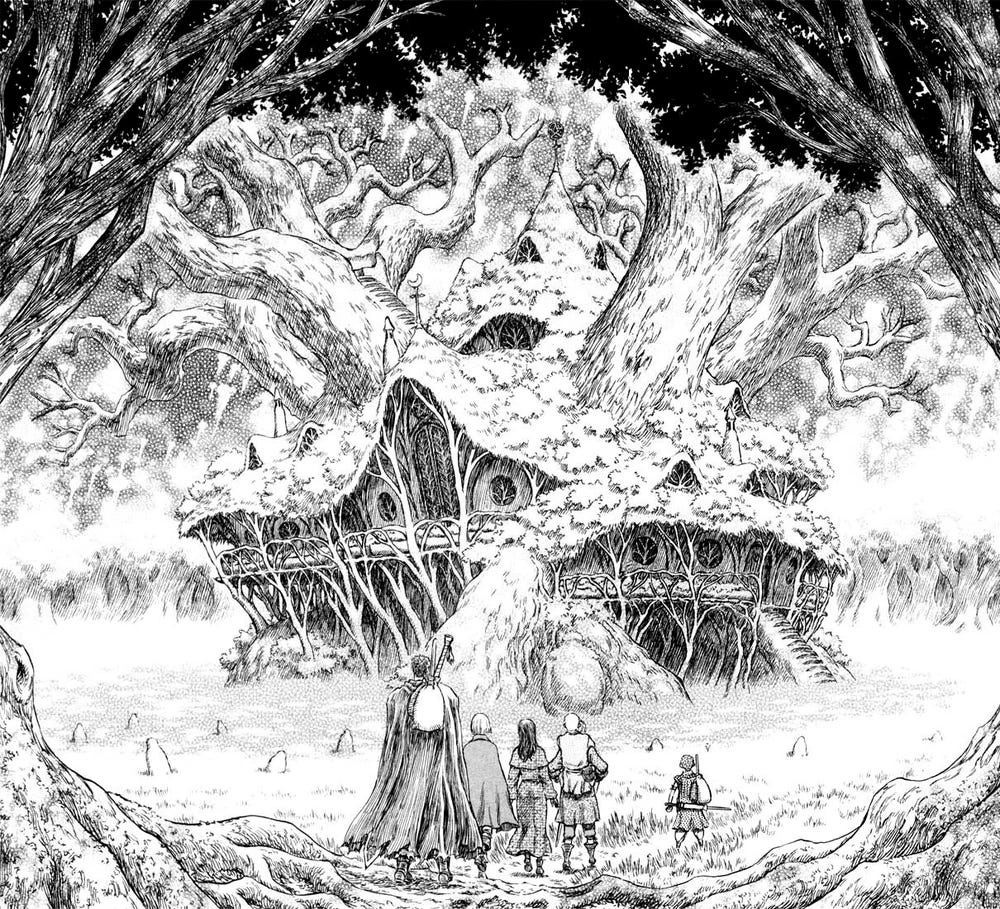
(Post-Script) More Weight: A Salem Story
Written & illustrated by Ben Wickey
I began writing this post some months ago, well-before encountering More Weight: A Salem Story, Ben Wickey’s first solo venture into graphic novels. Upon finishing, while on tour in October, I was so impressed that I decided to squeeze in a last-minute entry.
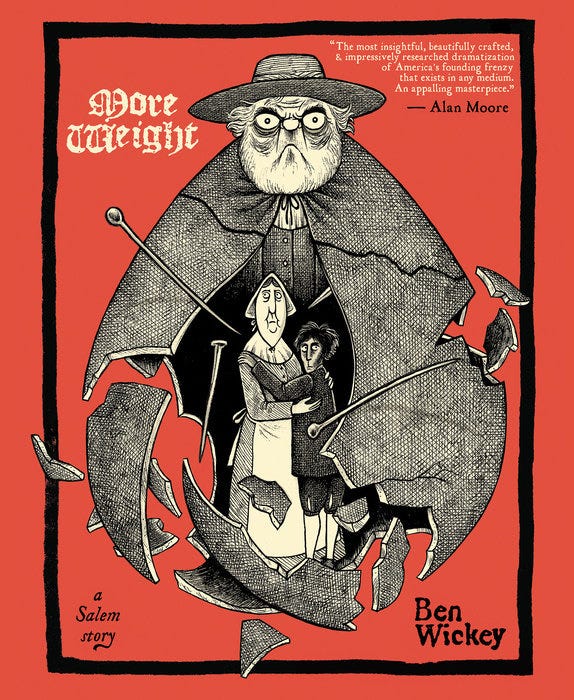
That More Weight is Wickey’s first foray into novels is unbelievable, as it’s a work that would make nicely for any writer’s magnum opus. More Weight is head-spinningly ambitious, centering on a message that pairs nicely with Moore’s From Hell — and similar to Moore’s handling of Jack the Ripper, Wickey is doing a touch more than retelling the Salem Witch Trials. The setting stretches across three different time periods — the 17th century, during the trials themselves, the 19th century, in fictional conversations staged by Wickey between the ghosts of Henry Wadsworth Longfellow and Nathaniel Hawthorne, and the 21st century, in modern-day Salem. Across these periods, Wickey has painted an intricate picture of American culture, showcasing how we never quite recovered from the wounds the shameful trials left in our national identity, and, what’s more, how the fetishization of the tragedy continues to fuel gaudy fixations on Halloween and witchcraft.
More Weight centers around Giles Corey, one of the accused men of the trials and the husband of likewise accused Martha Corey. While the tragic story of the Coreys is fascinating on its own, where Wickey strikes a “Moorian” quality is in the examination of the story-of-the-story, largely done by the ghostly exposition between Longfellow and Hawthorne. Self-acknowledging as a fictionalized retelling of true events, Wickey’s tale seems less concerned with recounting the story exactly as it happened so much as properly representing the mythological image of Giles Corey, the defiant spirit of America personified. Do not misunderstand my assertion however — Wickey isn’t making up events so much as filling the gaps of his extremely well-researched work with little embellishments here-and-there that serve to make the characters and setting more rich.
Accenting this beautiful tale is Wickey’s hand-drawn art, perfectly cartoonish and ever-morphing in style. Every panel portrays with utmost clarity the emotions of those caught in the nexus of the scandalous and fatal series of kangaroo courts, and, make no mistake, the emotions are abound. On multiple occasions, I found myself unable to put the book down, and despite knowing the conclusion foretold by history, a part of me clung on to the potential of a happy ending for the tale’s central characters, hopeful that maybe there was a version of the Salem Witch Trials never before heard where everything worked out and everyone went home, healthy and happy. To make me cling so naively to his characters is already no small feat, but to handle such a dark subject with utter elegance is nothing short of magical. For that, More Weight: A Salem Story is my true top pick for Comics for Metalheads, and my favorite read of 2025 overall.
 | A guest post by
|