

Three Years Later
Still haven't been stabbed

The past year has been the most surreal of my life. Mired has been surprisingly well-received, having played over ten shows since our live debut in April. Our positive reception led to several more shows, and later, a tour through the Southeast alongside Charleston’s Disenthralled. In the break between shows, we’ve built our practice space into a makeshift recording studio and have written enough songs to comprise a debut LP. We’ve been busy.
Unfortunately, this past year hasn’t all been rock ’n’ roll and checking off bucket list items. I suppose it was only a matter of time, but I also found myself the subject of slander on more than one occasion. A lot of our numbers have scattered at the hands of feuds and other various trespasses. Even in the cases where I wasn’t the target of any ire, I found myself caught in the middle, forced to bear the brunt of the drama and act as a conduit for the grievances of others. Putting myself in the line of fire to protect our mission has had some… interesting consequences.
Having seemingly out-of-nowhere moved-and-shaked my way through a scene as liberal as Savannah’s, some assumptions were bound to be made. Thankfully, the assumptions were so off-base that little was done to tarnish my already somewhat controversial image. (The most absurd to-date being a theory that I’m a strategically planted neo-Nazi running a covert enlistment program in the guise of a metal club.) As I’ve been decidedly vague about my background thus far, I might as well go ahead and prepare for Year Four by dispelling — or maybe reaffirming — any assumptions you yourself may have…

Ascent
After spending the first five years of my adulthood back-of-house, like any, I started bumping my head against Savannah’s very low ceiling. Having recently dropped out of Georgia Southern’s computer science program to take on more work hours, I was still very much fixated on establishing a career in technology. Today, Savannah’s small tech scene is just large enough to offer a noob some footing, but a decade ago, the idea of scoring a tech job in this town was laughable. I left Savannah, and headed for Atlanta.

Even being on a quest for fortune, I was far more fortunate than I could’ve ever predicted. While perusing Craigslist for any kitchen gig I could find in the city, I got the hopeful impulse to check for technology jobs. One entry called out exuberantly over all the rest: “Earn While You Learn!” Peering within, the listing described a nonprofit that would train its students in both technology and business practices, capping it off with a tech internship. Unbelievable. Almost certainly a scam.
After I applied, I resigned to the notion that I had sheepishly handed over my information to what were obviously scammers out of utter desperation to work in technology. Understandable, but pathetic nonetheless. I returned to my job applications, bearing my own mediocrity in mind, lest I return to the childish distraction of seeking my dream career.
A few days later, I received a phone call from a woman — Dr. Dee — purporting to be a member of the student services team of The Nonprofit. I wasn’t sure how the scammers managed to successfully rope a woman in Atlanta into their cause, but their ruse was growing more impressive by the second. Dr. Dee then began to say all sorts of things a person working at a real nonprofit would say, like “We’d like for you to come in for an interview”, and “You’ll need to take a drug test”.
This was too good to be true, right? There had to be a catch.
There was. Turns out, this program was really fucking difficult to get into, and harder to survive. Of course.
The first sieve was age — nobody below eighteen or above twenty-four. I was twenty-three. The second: no college degrees allowed. Done.
Next came careful vetting through background checks, interviews, and even a written essay detailing why you thought yourself worthy of admission. Of the eight-hundred applicants for the Spring 2015 cohort, one-hundred and twenty were admitted, including yours truly. One factor united us all: we were broke and wanted that to change.

Out of the Deli Slicer, Into the Meat Grinder
Long story short, I crushed it. We all did. That was the only option. Our attire, our punctuality, our speech, our academic performance — all discernible details of our person were closely scrutinized. Every misstep was penalized by docked pay and converse removal of points from a scoring system applied to all students. Bottoming out at zero points resulted in getting kicked out. (“Firing yourself”, they called it.) Losing one-third of our mass along the way, what emerged on the other side of the gauntlet was no longer a rag-tag gaggle of eclectic urbanites, but a mental-militia of finely-crafted young professionals, sharp in dress as in mind.
A key ingredient to The Nonprofit’s process is the ability to dispatch their students to various internships, each role carefully selected per individual so as to optimize their success at the hosting company. A truth that dawned very quickly on us students was that, stated plainly, some internships were more valuable than others. As many already know, internships are usually relegated for tedium seen as tiresome or beneath actual employees. What’s more, scoring an internship does not mean it will result in you being hired upon expiry. Certain companies became known as safe bets, where the success of prior interns had achieved tremendous buy-in from the hosts, who’d then taken in a dozen or more interns a year, and subsequently offering many of them jobs. (Cox Automotive comes to mind — some of my peers still have jobs there a decade later.) While such safe bets were plenty enticing for most, many of these jobs were “customer service”-oriented — call-centers, basically. I shuddered at the thought. I couldn’t imagine anything less than being a coder.
Luckily for me, a board member of The Nonprofit had aligned interests. Having gathered his riches through co-founding the technology-fueled company ICE (Intercontinental Exchange, owners of the New York Stock Exchange — not the ethnonationalist paramilitary), he was keen on angling The Nonprofit towards the creation of programmers. Of the original one-hundred and twenty students, twenty were further selected into a “programming track” via an interview and logic test. I recall being so nervous about the test that I found the instructor, Uthra, afterwards and implored to her that I had considered a different solution to one of the questions and was worried that I had hastily chosen the wrong answer. Uthra assured me that I had long-surpassed the qualifying criteria.
While I was feeling much better about my odds of scoring a programming role, one-of-twenty felt too fractured for any assurance. I wanted to be certain that I would walk out of the program with the job I’d always wanted. Certainty could only come from being the best.
I was — at least by most of Year Up’s measures. I was the highest scoring student in the programming track, easily gamed. Using the combination of my brief time spent in college and a natural habit of autodidacticism, I scored perfectly on every assignment and completed every extra-credit question and assignment as a means of forcing my grade to above 100%. Uthra eventually forbade me from extra credit work so that my score would progressively normalize back (close) to 100%. I still managed to finish with a grade of 102% or so. While scoring high for its own sake is not unlike me, my goal was to ensure that I would not be precluded from any internship deemed too advanced for others. Who knows? Maybe I’d score some really cool job writing code for one of Atlanta’s many hosted megacorporations.

From Ghettos to Galas
My high academic performance caught the attention of those I needed, but with the gaze of the Internship Team came far more than I had bargained for. Inducting me alongside a handful of other high-performers (“rock stars”, we were dubbed), a team of poster children was assembled to be used for the courting of corporations. This would most often manifest in our inclusion on interview panels whereupon prospective investors would question us to the experiences that led us there. On more exciting occasions, we would be invited to rooftop parties and fundraising galas, given a couple of drink tickets, a stern warning, and eventually, a microphone through which we could relate to a well-dressed audience of encouraging smiles our then-unfolding rags-to-riches tales. We each learned how to lean into our backgrounds so as to strike a chord with the potential investors. My shtick was that of a natural talent overlooked by the education system and seeking to escape my family’s history of drug abuse and prison time. My programming counterpart — an Egyptian-American named Taha — would lean into the image of a tenacious hard worker hoping to care for his mother. The single mothers could really get a room going. Once the cracking voice and glistening eyes started, it was in the bag.
Don’t mistake my glibness for insincerity. As rehearsed as these speeches became, there was nothing but truth to our tales of sudden ascent. To spend our days in suits and skyscrapers and our nights in hoods and complexes amounted to a shared case of imposter syndrome. There was no way for us to peer over wine glasses at neighboring skyscrapers through anything but starry eyes.
On a venture to the rooftop of Atlanta Tech Village — a Silicon Valley-style startup incubator in Buckhead — I recall being washed in surrealism as I strolled over to an event-catering spread and realized this was the very first time that, after years of working in catering, I was to be the recipient of a painstaking arrangement of hors d’oeuvres. No longer would I have to hope that the party would conclude with some leftovers for any chance at getting a taste…
I stashed some for later anyways. In my solidarity with those across the table, I resolved to return anything gained to the place where I came from. At that very moment — and for years to come — I didn’t have a firm grasp on what that may look like in-practice, but I’d start with taking a few appetizers back to my roommate.

My internship went very well. I was hired on to a major US homebuilder, where I began studying reporting, statistics, data modeling, natural language processing, and artificial intelligence. For the first time in my life, I felt valuable. My intellectual power was not only hitting new heights, but I was getting the opportunity to be a leader within an industry. My decisions didn’t just matter — they were affecting lives. My workplace accomplishments went from benign drivel like “made sandwiches for Andre 3000 and Scar-Jo” to actions of measurable impact, like “helped reshape the way houses are priced during one of the biggest booms in American history.” Regardless, what good was my newfound effectiveness if it was only servicing those who were all well-off before?
My success, and that of my peers, ended up being shared by Year Up as well. By the end of the program, the gauntlet had worked its magic. Of the twenty programming students, only five were afforded programming internships. Of those five, two of us (Taha and myself) immediately entered into full-time employment as software developers. While seemingly meager in success at the start, the remaining eighteen students — and many others who dove into programming of their own accord — didn’t simply unlearn programming because they didn’t score jobs applying it right-away. In no time at all, most who had taken on coding were advancing faster in their careers than those who hadn’t. An international trade tycoon’s hair-brained idea to cram a fifteen-week programming course into an already rigorous Pursuit of Happyness-style program actually paid off.
Wanting to maintain the momentum, Year Up extended to many of us a request to help tutor the next round of programming students. I graciously accepted, seeing an opportunity to fulfill my promise to pay it forward. Every new class brought about more success stories, which brought about larger classes. It felt great to be apart of something that was measurably making lives better. I wanted to do more — to help with even more ambitious goals. This chance would to me in the form of an invitation to Year Up’s Alumni Summit, a gathering of success stories from around the country.
To my surprise, the Summit primarily served as an opportunity for alumni to mobilize their community efforts on a national front, collaborating with other “active” alumni to tackle shared problems. Subtly woven into this gathering of activists was the induction into Year Up’s organizational goals. A common rumor traded among the alumni was that The Nonprofit was primarily bankrolled by a shadowy Democratic billionaire family. Some credence was lent to the gossip when a Summit guest speaker, DeRay McKesson, instructed a roomful of dining alumni to vote for Hillary Clinton in the upcoming presidential election. Cold realization trickled down my spine. All-of-the-sudden, I was aware of my place in America’s political machine.
I despised Donald Trump (and still do), and while I’ve never much liked Democrats, I have historically preferred their sometimes-populism-fueled policies to the boneheaded Neocon strategy to, through sheer ignorance of economics, collapse the United States by “starving the beast”. Regardless, I felt extremely uncomfortable about being corralled back to a known Neolib with a tendency towards hawkish foreign policy. My discomfort was double in-light of the shady treatment of Bernie Sanders by the DNC, something that was obvious even before the true nature of the shenanigans surfaced in Wikileaks’ strategically dropped DNC emails.
Regardless of the donkey in the room, the Summit still achieved what it had set out to do. My wariness of being a pawn in America’s tainted bicameral system tucked to the back of my mind, I joined on with Atlanta’s local alumni board and got to work helping out with the continuous schedule of community events. This would carry for three more years, culminating to my attendance to multiple Summits, and eventually, my election as vice president of the Year Up National Alumni Association’s local board of alumni in Atlanta.

Descent
I didn’t initially want to step into a leadership role on the local board. If anything, I was hoping to start devoting more of my time to my own personal goals, largely due to a growing disenfranchisement from political activism, especially if that activism was at the behest of Democrats. After snubbing Bernie for Hillary and subsequently putting forward an absolute milquetoast like Joe Biden to take on Donald Trump and his army of Neocameralists, it had already become clear that Democrats were out-of-touch. What’s more, some of the non-Year Up activists I knew were espousing increasingly vitriolic rhetoric, causing ideological infighting within the scene.
When rumor reached my ears that someone I was loosely affiliated with may have participated in the attempted firebombing of a police station, it occurred to me that I needed to distance myself from those who seemed to being getting a high from their delusions of being America’s next revolutionaries. The pendulum of reform-and-reaction seemed to be swinging harder-and-faster, and it has yet to decelerate. I became less fixated on affecting direct change and began to ask myself a more pressing question: why was change becoming so difficult to enact? The route my peers were embarking down seemed to be worsening the state of affairs. What was our plan? Was there one? Per the accepted definitions, I don’t mark any rebellion a revolution until I hear a compelling plan of what’s to come after. I never heard any such plan (and still haven’t — at least, not from any of you), but I have seen plenty of rebellion since.
Despite my mounting reluctance and uncertainty in our greater goals, former officers of the board nudged me towards relieving their burden — so I went for it, running largely unopposed. I don’t regret staying on the board, as the work we were doing ultimately had little to do with who was holding the presidency, or even local office. A school without supplies is only a school without supplies, and helping to gather those supplies is a good thing to do, plan-and-simple. No politics to it. Quelling my discomforts with the “top-down” liberal organization I was embedded in, I set my attention to helping our gang of activists keep tackling any issues we spotted in our community. Using a combination of organizational funds, donations, grant money, and elbow grease, we did just that.
Until COVID
This may not come as much of a shock, but running an events-driven organization is nigh impossible during a city-wide lockdown. The alumni board, and all of its operations, imploded. To make matters worse, my mental health was descending to new lows, the problems born of my messy childhood (some stuff about torture, a gun, and the wrong end of a custody battle) were spurred along by a series of ill-chosen relationships. In my concern for my career, I had neglected caring for my own sanity, becoming a workaholic and remaining in romantic entanglements that were demonstrably damaging my happiness and dignity. Not long after the conclusion of what I can only describe as a “seven-year break-up”, I had fallen into a subsequent relationship with a likewise damaged person, and suffered all the consequences one would expect.
Blending a failing relationship with the failure of the alumni board and the subsequent alienation brought about, every festering problem in my brain bubbled forth like a volcano. I was sent to a mental hospital after a suicidal mental breakdown, after which I spent a week trying to convince the staff that I was stable enough to go home. I wasn’t even close to stable, but my sudden disappearance from my job had been explained away under vague terms and each day spent in that loony-bin led to mounting curiosity. Plus, my week in the world’s worst hotel netted me a $5,000 bill.
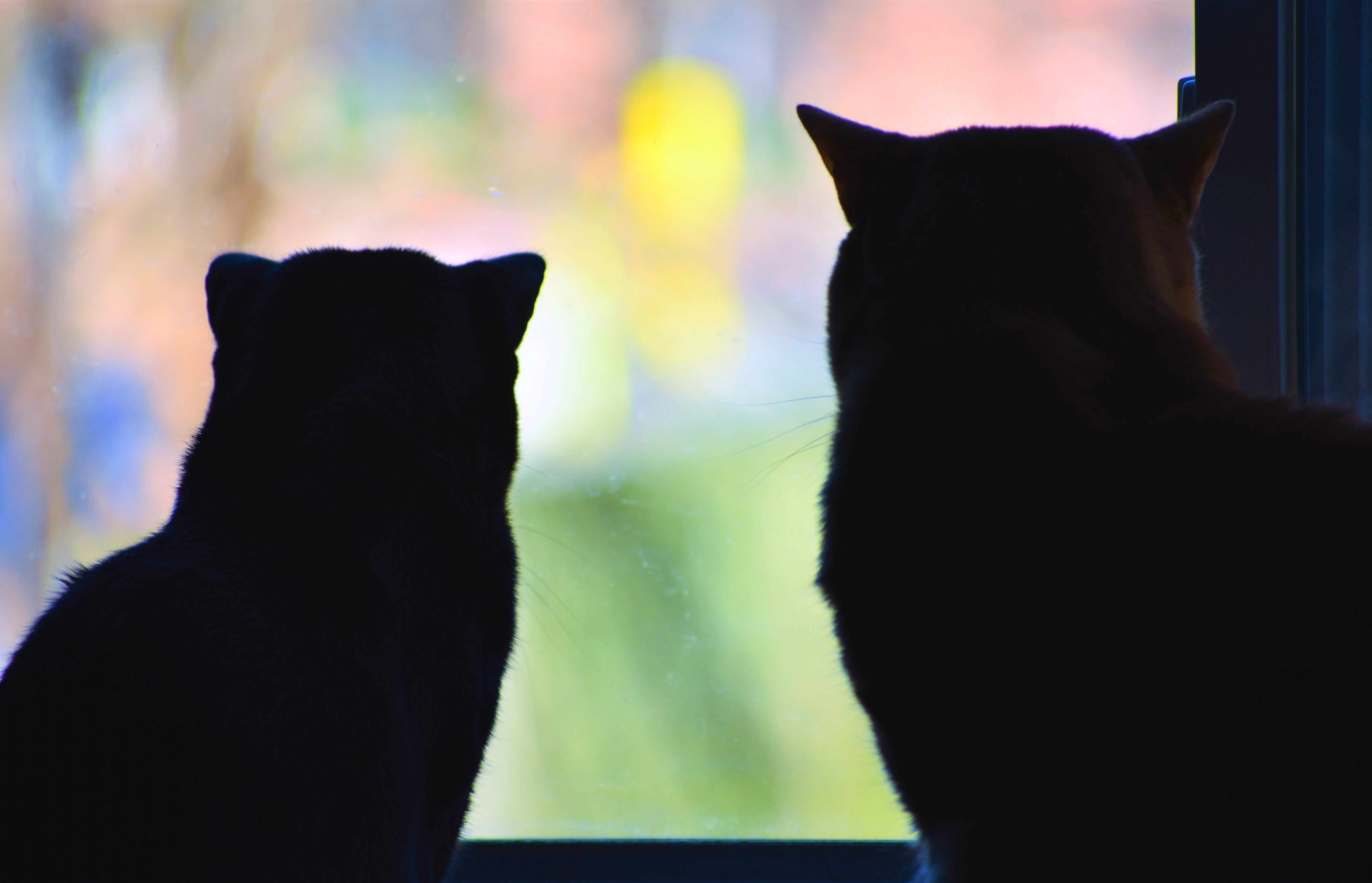
Not too long after my mental breakdown, I moved back to Savannah. The change in scenery, wonderful as it was, did little to slow my descent into dissociation. My mind slowly fragmented into parts. Though home once again, I had no friends, scene, or direction, wholly unlike my life in Atlanta. Pressed by the vacuum, my struggling relationship collapsed, and I found myself living alone in a spaciously renovated Victorian apartment with two cats and far too many personalities. (Altogether, five, if you count the cats.)
Meet Seth
Carrying multiple personalities isn’t quite how it’s made out in the movies, but, weirdly, it’s not completely unlike it either. Blacking out is less like what one suffers when drunk on alcohol, where long periods, sometimes hours, can vanish. Instead, the morning after will yield only a scattered, disjointed chronology of the night before. Even the memories you do have seem incorrect — maybe you recall a situation, but not what was being said — or you do recall what was said but not where it occurred in relation to other recalled events. Maybe you misconstrued something altogether. Maybe they’re reframing events because they know that you don’t know any better… The slow breakdown of reality over years gave me far more empathy towards victims of dementia than I ever wanted. There’s also the matter of the personalities themselves.
The only time one of my personalities took a name upon itself, I was highly unsettled. Ironically, my discomfort was actually a source of my dissociation — my self-disgust was driving me to repress parts of my personality that I found scary or distasteful. This bubble forming in the back of mind festered for years, finally rupturing, spiteful bile pouring from my mouth in the form of three words: “I am Seth.”
I’ve always had a fixation with ancient cultures, and Seth would undoubtedly have to be my favorite of the Egyptian pantheon, largely because of his fractured image. In short, Seth is a god of the desert and storms, natural forces of chaos, but the politics of Egypt led to a shift in his public perception, resulting in the devilish image he carries today. A repressed pocket of my brain nominating itself as Seth wasn’t so much a declaration of identity as it was of nature. Knowing I would understand, one part of my brain told the other part of the storm forming in its hemisphere. By repressing the darker side of my person, I was becoming a monster. More time brought greater truth to the warning, and shamefully, only once left with no other choice, I begrudgingly heeded the call and sought help.

Annie, my shrink, was the first to plant the seed of an idea that would eventually become the Black Metal Book Club. In the time that I had been receiving treatment from her, I had picked up music and was practicing alongside Vlad, a local goth who has since moved along to better cities. After his departure, the sudden absence of anyone to continue working on music with was eating away at me. Annie, seeing the obvious void, threw out the idea of finding my people through music. “Also”, she added, “Have you considered giving Seth some time onstage?”
Having picked up instruments early, music has been a lifelong obsession of mine, but I had almost completely tabled any performance when I entered into adulthood. I went almost fifteen years without playing instruments — almost the same amount of time I had been bottling Seth up in the back of my mind. It seemed fitting that music be the vessel through which I release it. Black metal had become my favorite genre over the years. I loved the elegance of black metal, where impact matters more than complexity. Likewise feeling intellectually unsatisfied with pop music and frustrated by the degradation of artistic integrity at the hands of mass appeal, I was long impressed upon by black metal’s tendency for belligerency towards shallow music. I knew that if I started my own project, it’d be a black metal band…
…but I didn’t know many people who liked black metal in Savannah. Starting some secretive one-man project seemed like it’d make my problems worse, not better. I resolved to place a beacon: the Black Metal Book Club. The rest is history. That I could successfully start a club and metal band while being a nobody in Savannah’s music scene comes from, arguably, the most valuable skill Year Up taught me: how to organize. I doubt they ever foresaw their lessons being used for such a ludicrous goal. Maybe they did. I owe it to them nonetheless.
Fast-forward three years, and I’ve finally fulfilled what I had set out to do — but I was still left with a “Black Metal Book Club”. Truthfully, we’d become more of a “Metal Club”, because any semblance of a book club format had been stripped away, and we’d started to attract a lot more than black metal fans. This club, bankrolled mostly by my full-time job, was becoming difficult to run while being in a band. I needed to make a decision:
Do I pull away from the band and focus on the continued trajectory of the club into something more broad (my original goal, some of you might recall), or…
Do I jettison the waste and return us back to our origins as a club hellbent on creating a black metal scene in Savannah, now with an actual black metal project to center around?
Well, what do you think I chose?
What is Black Metal?
Really, what is “black metal”? After starting the club, that question was one I knew I was gonna have to answer, even if I wasn’t eager to. This need did not emerge from anywhere other than the fact that someone, eventually, was going to preclude themselves. At first, the reasons for preclusion were more social, say ousting a creep or a solicitor, but as we hit critical mass, in order to preserve the ethos of a black metal club, I was inevitably gonna have to say to somebody, one way or another, “If you’re not going to listen to black metal, you should leave.”

Some of you may bristle at the notion. “Gatekeeper”, you hiss, appalled at the travesty to the scene. Your response is a luxury saved for those who do not have to maintain a space for others. I promised a space for black metal fans, and once black metal fans started suffering on behalf of someone of spurious intent, the easiest solution was some good ol’ fashioned gatekeeping. (If you disagree, go start your own club. I’m sure the scene will only benefit.1)
Okay, Fine, So What is Black Metal?
As many a person found their way into our little group, I never fettered in my conviction on its purpose: I crafted this club as a discussion group centered on black metal. Our first meetup was three people: myself, Andrew, a friend of mine from Atlanta, and — as far as I’m concerned — the club’s first member. Today, he’s called Grey by many of us, mostly for our own convenience and not by any request of his, and — three years later — I still regard him as a friend in high esteem. To the point, Grey very much likes black metal.
Grey’s primaries in black metal aren’t my own. His favorite bands are all bands I enjoy — Taake, Watain, Gorgoroth, etc. — but they’re not my first choice. I describe as favoring “mid-tempo” black metal, more in the vein of Urfaust, Circle of Ouroborus, or The Ruins of Beverast. The worlds of difference between these styles are apparent to insiders, but completely lost on anyone outside of the sound. However, should one start roping in more metal fans, the small Venn diagrams chaining us all together start to become apparent. We did indeed rope in more metal fans, some with no discernible linkage to black metal fans at all.

Weirdly, most of the consistencies I spotted between black metal fans weren’t situated around the sound at all. Some of us were eclectic fans of all metal, while some were Sabbath purists. Some lauded the kitschy sound of bands like Cradle of Filth or Dimmu Borgir, while some detested any departure from the more raw Finnish form. Some like Mayhem, and others, Burzum. Some will tiptoe into NSBM, while others never do so knowingly. It became rather apparent that a black metal fan could be… well… anybody really. The commonalities emerged not between each member’s musical preferences — or any preferences, for that matter. Instead, what defined a black metal fan was in what they were opposed to.
It’s easy to feel isolated as a black metal fan. Part of this is self-imposed. Nobody forces a fan into fandom. If the mythology of the scene bears any truth, the black metal fan in particular finds their way to metal’s slimy underbelly after tiredly sloughing through all the modern musical world has to offer, finding only boredom and weariness. For that reason, the best way to define what is black metal would be to clearly define what it isn’t.
Alright, For Fuck’s Sake, What Isn’t Black Metal?
Well it sure as hell isn’t Taylor Swift. My girlfriend once had to sit through a spiel from one of our most insufferable (now-former) members explaining how significant Taylor Swift is to the feminist movement. That anyone can believe this bullshit is already baffling for me, but that this person — being a professor at SCAD — can’t see through the obvious veil of capital to the marketing team beyond causes me no shortage of concern for the direction of American culture. Corporatism continues to creep into the world of art and activism, ensnaring the simpletons and pseudo-intellectuals into its masturbatory facade and placating them with assurances that purchases and fanhood are a sufficient proxy for getting off one’s ass and doing something.
My wonderful girlfriend admittedly only had to suffer this vomit-inducing drivel because she was attempting to extend an olive branch to this member due to me having upset them. This feud occurred because I removed this person from our Discord, among twenty others (one third of the server — a matter those of you who read the Year Two post may recall). When checking this members name against the server (to see if they had ever posted anything in the black metal recommendations channel), the lack of any results actually surprised me. This person had already been deemed a deathcore dipshit by much of the group, their utter lack-of-interest in black metal rather glaring, but I had assumed there would be at least one instance where this person — very active in other channels — would have tried to participate in the point of our club. They didn’t, simple as that, and the data stated it quite plainly. In that moment, I considered giving them a pass — partly because of having gotten along prior, but mostly because I feared the fallout of their removal. Upon realizing the fear staying my hand, I pressed forward, determined not to show this person any special treatment when they had measurably failed the fundamental reason for this club: to discuss and share black metal.
My fear of fallout was not unfounded. The Professor did not take it well, and immediately set upon her campaign against my misogynistic tyranny, citing a dispute we had a couple weeks prior as my motive for her removal. She likewise asserted that I had fabricated my basis for her removal, that she had actually posted some black metal recommendations and I merely deleted the posts. My girlfriend, being an admin of the Discord server, checked her claims in the audit logs (which would show her posts regardless of deletions) and found her to be full of shit. For this, my girlfriend herself was happy to shed the friendship. Neither of us like liars.
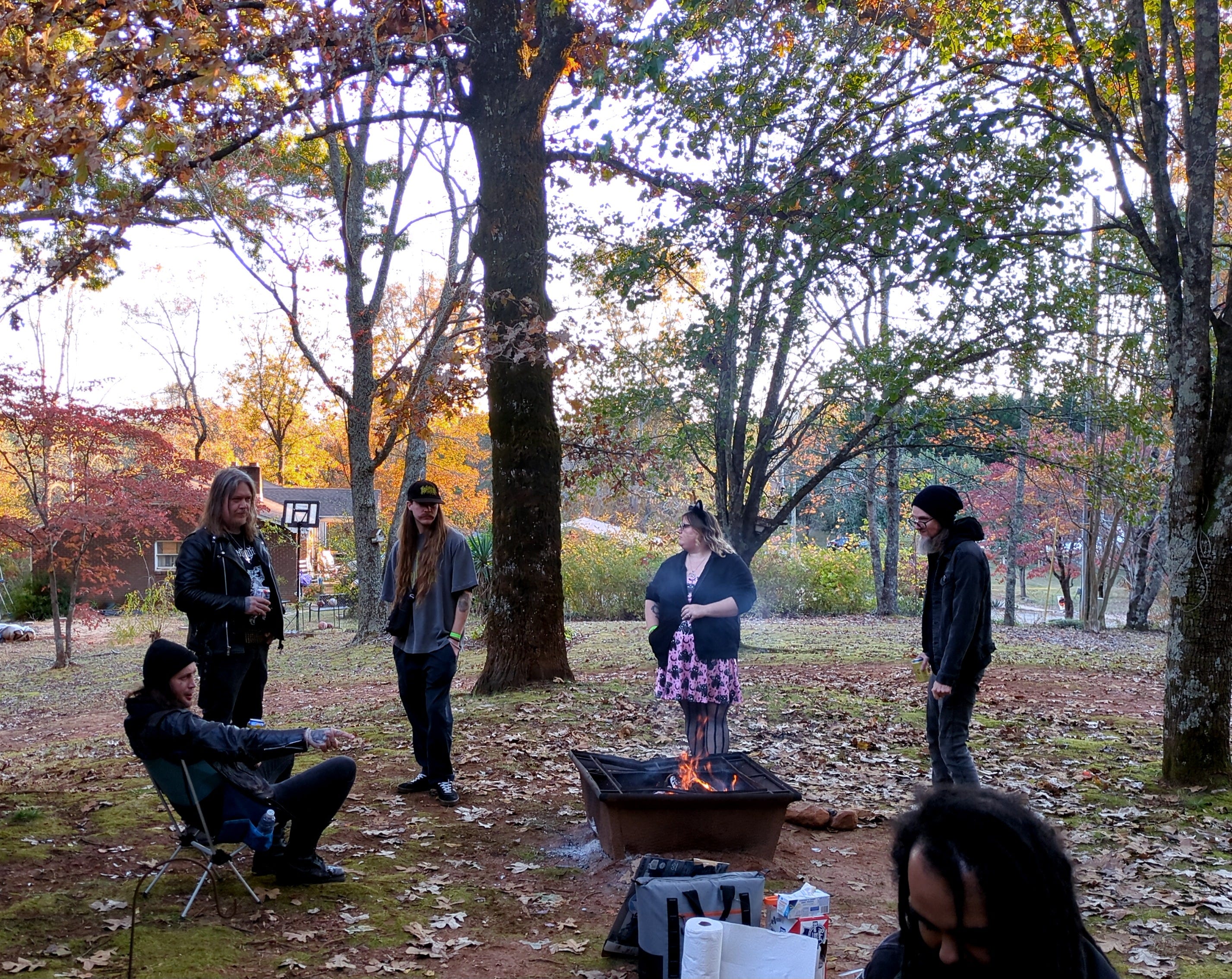
The original dispute that I was accused of having removed The Professor from our Discord over occurred during a Metal Monday. Immediately upon her arrival, The Professor launched into a particularly eye-roll-inducing tirade about how she had been stalked around the gym by “some creepy guy”. (He had consistently gone to the same stations as her.) Before I’m cancelled for my insensitivity towards the plight of well-to-do pretty women in public spaces, the recurrent nature of such tirades from The Professor had become a detractor for many by this point, including those who would generally agree with her.
After an excruciating five minutes or so, the group began to fracture into smaller conversations, the original discussion on music long forgotten. Interrupting The Professor, I firmly questioned her to what actual threat the guy posed to her, and which of his actions couldn’t be reframed into something benign by only a simple change in her perspective. The answers to those questions are simple: the guy posed no threat to her, not even interacting with her, directly or indirectly, and his perceived stalking was demonstrably harmless, by simple merit of her walking away unharmed. Instead of marking the perceived-yet-unfulfilled threat, she chose to manufacture one, finding a nemesis in someone who, at the worst, found her pretty and was too scared to approach her.
Biased as I am against The Professor, I truly don’t think the creeps who restrain themselves should be the people we lambast. As someone who has been continuously subjected to truly creepy behavior — everything from unwelcome groping to being taken advantage of while black-out drunk — I’m not inclined to give a shit about a fictionalized creep who kept their bullshit to themselves.
I believe many — namely those deeply immersed in what I call “pop politics” — would be shocked to know just how many people have recoiled from gender-fueled politics as of late, and the only reason I even know is due to people repeatedly expressing their thoughts to me in confidence. Contrary to common thought, almost none of these people are rightist, a few of them women, and all would eagerly stand in defense of queers and transgenders. Overall, the fears that have been expressed to me are less oriented around the differences those professed hold with others and more situated around matters of language, ideology, and feeling that they can’t voice agreeable dissent towards people like The Professor.
One of the most egregious incidents to occur to this effect happened on our Discord. A budding guitarist — a black woman — hopped on our general chat one day to ask if there were any female musicians who wanted to form a band with her. Another member, an able vocalist — and a white trans woman — replied. Unfortunately, instead of the vocalist heeding the call to opportunity, she chose instead to call out the guitarist for their “creepy” request, especially pertaining to the use of the word female. Anyone familiar with the Southern slang spoken among black folks knows “female” (in this context) to be as benign as “woman”, but this did not occur to our trans friend. Recognizing the situation as too volatile for a white man of my demeanor to go near, my girlfriend stepped in to notify the vocalist of their faux pas. It was too late. This was in our general chat, in plain view of dozens of people. I had to hear about this mishap for days.
I wonder what could’ve come of that conversation in a world without left-wing cannibalism? Given the proclivities of those involved, I expect the resulting project would’ve been blackened hardcore. Not mad at that. I’m sure the all-female membership in a machismo music style would’ve been a nice shtick. Given her fixation on women, fades, and gym-mirror selfies, I expect The Professor would have been a huge fan.
The Fallout Continues, Thankfully
There were far more effects to emerge from my reign of misogynistic tyranny, but I’d count most of them good. Chief among them would be the departure of a similar firebrand to The Professor, a local artist and bartender known around town for being wrong about most things. There’s a hint of good intentions somewhere in The Artist, but everything else seems to emerge from social media snippets of people pretending they care about Palestinians. Naturally, it didn’t take long for the club’s two whiniest members to convene and decide that I was a misogynist, a racist, and an abuser hellbent on using my metal group to bully the weak and vulnerable — my girlfriend included. The Artist promptly notified my girlfriend that she was being abused, which has become a subject of laughter for us since. Truthfully, who’s more hateful: the person who spends all their spare time trying to unify people of disparate ways of thought, or The “Artist” that attempts to start slanderous rumors about other people due to differences in opinion? Is your art your faux linocuts, or is it the image of a progressive that you painstakingly carve out of others?
Savannah’s “Left”
The blowhards that took advantage of my good will to sow disarray within our club are not very unique when held up next to the rest of Savannah’s left wing, especially those pouring from SCAD. It’s no secret that I’m not a fan of SCAD, but most of my criticism is towards the school’s selective curation of the local economy via land grabs and lease terminations, as well as the special treatment they get on local ordinances. The bullshit yuppie businesses that keep springing up across the Starland District — day spas, salons, personal training studios, crepe restaurants, wine bars — pair nicely with the overpriced apartment complexes and hotels angled towards well-to-do outsiders, most typically affluent students and their rich parents. Of course, some of those rich parents smell the trap, flip the script, and outright buy their kid a house on one of Savannah’s coveted park front properties for the kid to instead rent out to locals at the same prices originally targeted at them. I don’t hate the kids holding those houses — or even their parents, for that matter. They are the product of natural consequence. I do, however, hate everything about the meticulously curated economic disparity that enabled such a backwards scenario as outsiders hosting locals. I know I am one of many Savannahians harboring this disposition, and generally, the second-rate lives we live in our own town has a lot of us feeling fed-up.
To then have that same walled-off clique of affluent kids turn around and try to morally grandstand local black metal fans because of their “sketchy” tastes is tantamount in irony. Let me spell something out for you lot: nobody is buying the shtick. You can tell your friends and fans to punch kids in Burzum t-shirts all day, but it won’t make you less of a guest in the house of Liberalism.
To those of us who know better, you appear emotionally compromised and vainly engaging with politics for the artistic image. On the Left — not “hardcore kids”, but “people who’ve arranged cookouts in community parks, donation drives for hungry kids, and grant money for inner city schools” — we have enough adversaries to face without a bunch of infighting persisted by “Nazi-punching” wannabe-punk posers radicalizing kids who would have otherwise lent at least an ear to the cause — why else would they be at your show? A few of the musicians guilty of this onstage vitriol, I not only know personally but have counted as friends. Even if not expressly a target of these remarks, my status as a known ambassador of the local black metal scene still precludes me towards being offended on behalf of anyone of us with the mental fortitude to take something from an artwork contrary to an artist’s intentions. You may be unable, but that’s your weakness, not ours. Don’t make your closed-mindedness our problem, and don’t bring violence into what would have otherwise only amounted to a fashion faux pas. You are musicians, not militants. Despite the childish fantasies showcasing via your careless rhetoric, music is not a battleground, literally or figuratively. It’s a form of entertainment. It’s a marketplace of ideals and aesthetics, where one can walk away with any impression they choose — and that can include a liberal kid being inspired by Burzum while still harboring hatred for Varg. If you would encourage infighting and violence within the music scene, you have more in common with Varg than any of us seeking a place of unity.
Even amidst the sometimes-all-too-real pageantry of the black metal scene, the stakes are not high enough to harm people over, and if you believe otherwise, it’s because you’ve never accomplished anything meaningful outside the art world, where real work gets done. If you would mistreat anyone over music, what would you do over something that actually mattered?

Here to Stay
They say success is the best revenge, but I’d argue that revenge is the best revenge, followed quickly by success to really rub their dumb fucking faces in it. Despite my person and my people being the target of attacks, snubbing, sideways gestures, and even occasional hate, this club will continue, Savannah’s newfound black metal scene will continue, and I am sure everyone in this town who likes metal will somehow benefit. We shall remain a place for black metal fans to escape the vitriol, corporatism, and political pageantry of lesser scenes, and doubly so a place for those who can’t shake such habits to be ridiculed.
We have dusted off some of the older parts of the club that I had tabled — like Metal Mondays, which will be spearheaded by Grey going forward (first and third Mondays, 7p, at White Whale). That is the benefit of organizing a collective after all — no one of us has to do it all themself. Arguably being the most controversial of the group, I’m happy to recede to the comfort of my music studio and let what I’ve planted grow on its own accord, descending from my ivory tower only occasionally to chastise the pretenders.
Some of you that I’ve counterattacked, besmirched, or otherwise called out, there’s no hope for, and now that I've spoken my piece, I can return to a life unaffected by the ineffectual. Know that I haven’t spilled near as much tea as I could have, and the most salacious of it awaits any further provocation.
The rest of you, I recognize as impressionable in a world that gets more difficult to handle everyday. It is easy to misplace ones fears and find foes within friends. If you count yourself among those simply afraid, know that I mean well. If you’re going to tackle that fear by sporting liberalism, never do so in vain and never forget that, no matter how you frame it, liberalism is a philosophy of community and, quite plainly, love — in my case, maybe tough, dark, or even scary love, but love, nonetheless. If you want to see our world get better, start by turning your sights away from your fellows and neighbors — me and my black metal kin included, but, really, whoever your chosen bogeyman may be — and aim instead towards the very real powers that would drive us further apart, outwardly and inwardly. Until you can manage to do so, fuck off, and leave those of us who know what we’re doing alone.
Sincerely,
Set
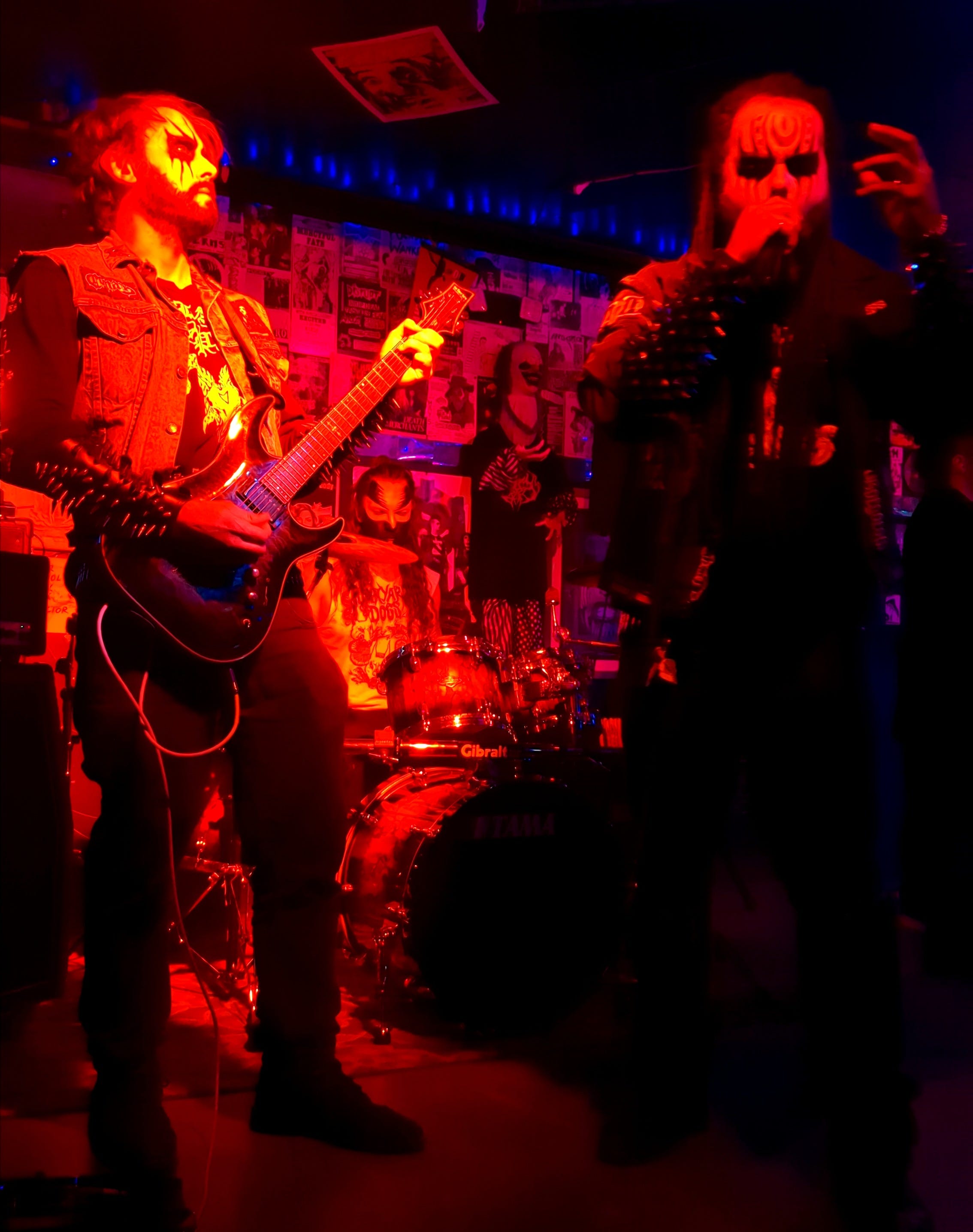
That both was and wasn’t sarcasm — the benefit of multiple personalities